
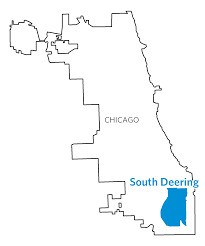
(South Deering Demographics sourced from CMAP Community Snapshot, 2025)
By GL News Correspondent | Analysis Desk
A South Deering mother and her children were violently attacked this week by a group of middle-school youth — an incident that has shaken residents across the Southeast Side and reignited deep concerns about youth accountability, neighborhood safety, and the systems responsible for both.
What happened is horrifying.
What it reveals is even more urgent.
GL News examined the data, the community profile, and the policy context to understand why this type of violence is becoming more visible and what South Deering’s numbers tell us about the pressure points beneath the surface.
ISSUE: A Community Shocked — and a Pattern Emerging
The assault appears to have been targeted, coordinated, and carried out by minors, raising immediate questions about how a group of middle-school students could mobilize this level of harm without intervention.
But South Deering is not a community without warning signs.
- 20.3% of residents are youth ages 5–19 — one of the highest youth concentrations on Chicago’s Southeast Side.
- Household structures reflect significant strain: 37.6% of homes are single-person households, and 13.6% are single-parent families with children.
- Nearly 16% of residents have a disability, further limiting supervision capacity.
These numbers paint a clear picture: youth are navigating neighborhoods where adult capacity, supervision, and social supports are already stretched thin.
This incident is not just about the youth involved.
It’s about the ecosystem that allowed this moment to occur.
POLICIES: When Two Systems Collide
1. CPS Discipline Restrictions and the Accountability Gap
Over the past decade, Chicago Public Schools and Illinois legislators have implemented discipline reforms meant to reduce suspensions, expulsions, and police involvement for minors.
But in middle-school cases involving group violence, these reforms often result in:
- Limited or inconsistent consequences
- Hesitation from administrators to involve police
- “Restorative” approaches even when harm is severe
- Cases falling into bureaucratic gray zones
Parents across Chicago have voiced concerns that youth who commit assaults — even repeated ones — often return to school with minimal intervention.
This structural gap directly affects communities like South Deering, where youth outnumber the available support systems that would naturally intervene.
2. Law Enforcement & Community Focus on the Migrant/ICE Influx
On the Southeast Side, a large share of police-community energy has shifted toward managing issues related to the new migrant influx and ICE-related concerns.
Residents have reported:
- Fewer youth-focused patrols
- Longer response times
- Distracted community meetings dominated by immigration issues
- Reduced attention on local youth violence
In a community where:
- 59.3% of residents are Black
- 35.1% are Hispanic/Latino, many in mixed-status households
this shift in focus creates a complex dynamic — and leaves youth behavior issues under-addressed until they erupt in public incidents like this attack.
ANALYSIS: The Data Behind the Violence
1. A Community Where Youth Outnumber the Village
South Deering has:
- 2,890 youth (ages 5–19)
- Only 5,497 households, most of them small or single-adult
- A median age of 41.5, signaling many older adults no longer raising children
The adult-to-youth ratio isn’t simply numerical — it is functional capacity.
Who is supervising?
Who is mentoring?
Who is available?
When middle-schoolers form groups capable of coordinated violence, it is a sign that the community’s social net has more gaps than threads.
2. Economic and Social Strain Fuel Youth Group Behavior
South Deering’s median household income is $37,095 — almost half the city’s median.
Combined with employment instability (44.6% of adults not in the labor force), high disability rates, and limited transportation access, youth often occupy unsupervised public spaces without structured after-school supports.
This is the soil where:
- Group identity becomes a coping mechanism
- Peer pressure intensifies
- “Mob-style” behavior replaces conflict resolution
- Violence becomes social currency
This does not excuse the attack — but it contextualizes how young people can fall into harmful group dynamics.
3. Policy Gaps + Community Strain = Predictable Outcomes
This moment is not random.
It is the collision of:
- CPS policies that limit real accountability for minors
- A police apparatus focused elsewhere
- A community with limited adult supervision bandwidth
- Youth whose social worlds are increasingly peer-led rather than adult-led
The result?
Vulnerable youth harming vulnerable families — and no system adequately prepared to respond.
RESOURCES: What South Deering Needs Right Now
For Families Impacted
- Trauma-informed crisis support
- Legal advocacy for navigating juvenile processes
- Counseling for children who witnessed or experienced the assault
- Safety planning resources
For Youth
- Conflict resolution programming
- Middle-school behavioral health support
- After-school spaces specifically for ages 11–15
- Youth mentorship circles led by trained community members
For the Community
- Parent and caregiver coalitions
- Community-led safety walks
- Restorative justice alternatives that center harm reduction AND accountability
- Clear communication from CPD on youth issues, not just migrant-related concerns
For Policymakers & CPS
- A reevaluation of discipline thresholds for coordinated youth violence
- Better alignment between schools, CPD, and community mental health teams
- Investment in high-risk middle-school zones
- Immediate creation of a Southeast Side Youth Safety Task Force (GL News can help convene)
THE BOTTOM LINE
The attack on this South Deering mother is not just a singular act of violence — it is a signal. A warning. A reflection of a community under strain and a policy landscape struggling to keep pace with youth realities.
If Chicago wants to prevent the next incident, the response must be as coordinated as the attack itself.
And it must start now.
 GLNews Network
Leave a comment